By Ashley McBryde
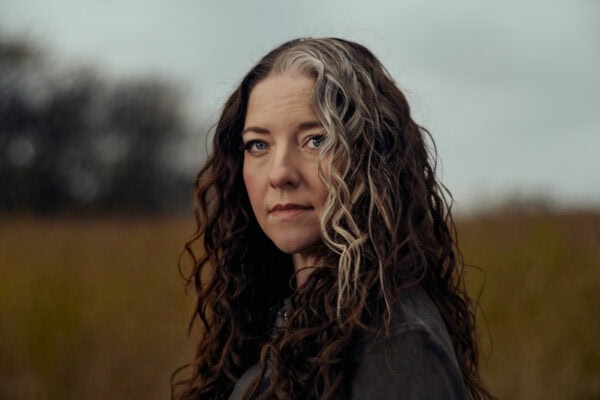
Photo: Nathan Chapman
I always knew that I wanted to be a teacher. I either wanted to teach history because I’m really good at telling a story, or I wanted to teach music. I was lucky enough to have music educators in my life that lived for the spark. I had a choir director that could take a person who could not carry a tune in a sealed container, and he would turn them into someone who could. They just lived for that feeling –– that spark –– and I just knew that would be a fulfilling thing for me too.
I suppose I still do create musicians.
I just do it from a different platform now.
I was in the fourth grade when I learned to play the trumpet. It was the coolest thing to learn. I still can remember what my teacher’s face looked like when I completed a scale. And that feeling of watching a child make a sound that is representative of whatever their instrument is? I imagine it’s an incredible feeling. If you are blowing into the clarinet and you make a sound that sounds like a clarinet, your eyes light up and your educator’s eyes light up.
It’s a magical thing.
I think we listen to music differently than other people listen to music. I don’t want to say better or worse – it’s just different. Take a monster vocal group like Little Big Town for example. They are masters of harmony. If they change this tiny thing here in a chord and this tiny thing there, we don’t have to know that that just became a German fourth. The term doesn’t matter. But as lovers of music, we are impressed by those little movements that make our bodies and our brains go, “Oh gosh, that sounded cool.” We appreciate those tiny idiosyncrasies from a vocalist or an instrumentalist on an almost molecular level.
We love jazz and we love big bands and we love classical because we were exposed to all of that. We were taught how to love something about it. I was a drum major. Think about any musician playing in the marching band. You’re using your core and your brain and your hands and your eyes and your ears and you’re staying equal distant from the people on either side of you and in front and back.
You’re basically a moving genius.
I think the closest that I can get to that feeling now is performing live when we do something like “Sparrow,” and we hit that a cappella flat-seven-to-four at the end, and then I usually throw my fist right up in the air like a band director would do when a band just killed it because that is close to that aha moment as I can get.
I think it’s why I always cry at theater performances. It doesn’t matter if it’s “Aladdin” or “Annie.” As soon as the lights go down and the orchestra hits their first note of the overture, I bawl because I know in my body all of the work that led up to playing that first note of a performance. I know what it’s like to beg your parents to be in band and having to be in band practice six hours a week and in all kinds of inclement weather or having to log hours and hours in a practice room and having an instructor go, “No, do it again.” I cry because I know everybody has been working so hard.
It’s not just me.
Everyone in my band feels that music education is extremely important.
Working with the CMA Foundation is one of my favorite parts of doing anything with CMA. My first time going to Music Teachers of Excellence, I wasn’t really sure what it was going to be like. It’s like the CMA Awards for music teachers. It turned out that someone I had marched with at Arkansas State [University]was being honored that night. It was this cool, full circle moment because here I am –– the big star I always wanted to be, and so is she.
The things we wanted to be when we grew up, we get to be.
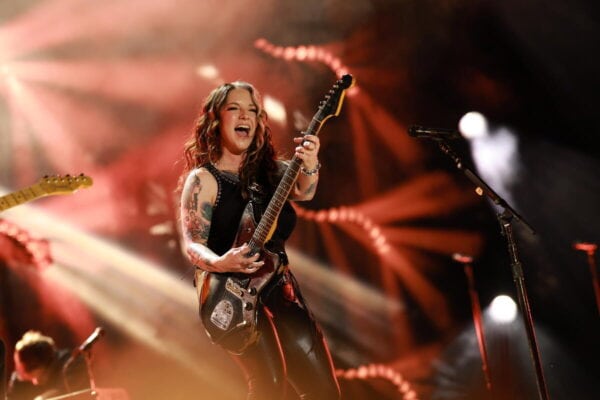
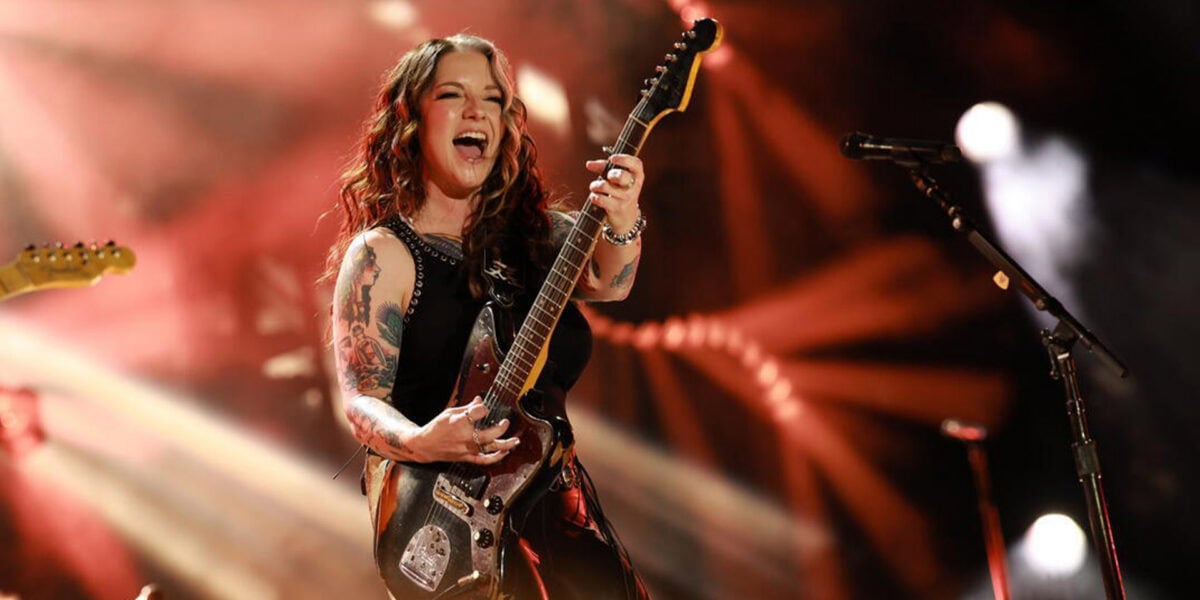
Ashley McBryde performs at Nissan Stadium on Sunday, June 8, 2025, during CMA Fest presented by SoFi in downtown Nashville. Photo: Natasha Moustache/CMA
I try to tell people as often as possible when they ask, “What’s it like being at CMA Fest?” — that it’s chaos. But really, it’s a lot of fun and everybody does it for free so that we can raise all of this money for music education. Most people can’t believe we play for free, but we do. We perform for free so that kids that need instruments get instruments and a school that needs a new piano gets a new piano. CMA Fest helps make Music Teachers of Excellence possible — it’s where those proceeds come full circle.
Photo: Acacia Evans/CMA
During this year’s CMA Fest, the Marching Crusaders of The Roots of Music made history as the first student marching band to perform inside Nissan Stadium. The group introduced Ashley McBryde before delivering an electrifying rendition of “Boogie Wonderland.” Scan the QR code to watch the performance.
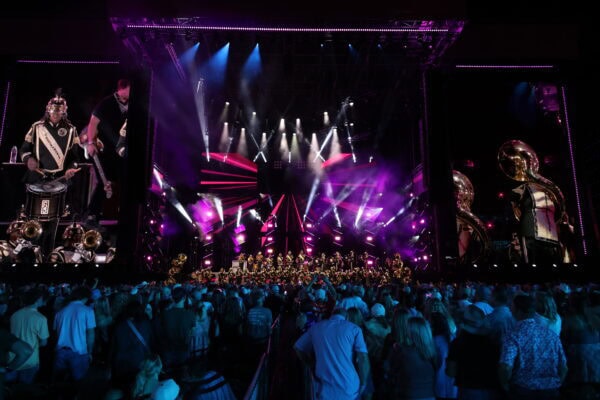
And getting to see that connection come to life is really powerful.
When I won one of my first CMAs, one of the perks was I got to choose a school that got new instruments. I saw that one of the New Orleans high schools was on there and I was like, “New Orleans always gets overlooked.” And they are underrepresented in how much influence they have in our music as a whole. So, it was just a really cool superhero moment.
Choir directors and band directors are wonderful people. They’re so patient. My God, can you imagine what it must be like to teach a child to play a clarinet? It’s got to be the most grating thing on our ears. And then when the light clicks on, there’s just nothing like it.
And I think that’s why Music Teachers of Excellence matters so much. It’s the culmination of all of that hard work — from the students, the educators, and everyone who shows up for CMA Fest — coming together in one moment to honor the people who keep the spark alive.